PRAESIIDIUM
Physics-informed machine learning for the prediction and prevention of prediabetes
Challenge
Prediabetes affects hundreds of millions of adults worldwide and can be reversed through timely changes in lifestyle. Mathematical models based on differential equations describe metabolic and inflammatory processes in detail, but their computational cost makes them impractical for real-time, patient-specific risk prediction.
Approach
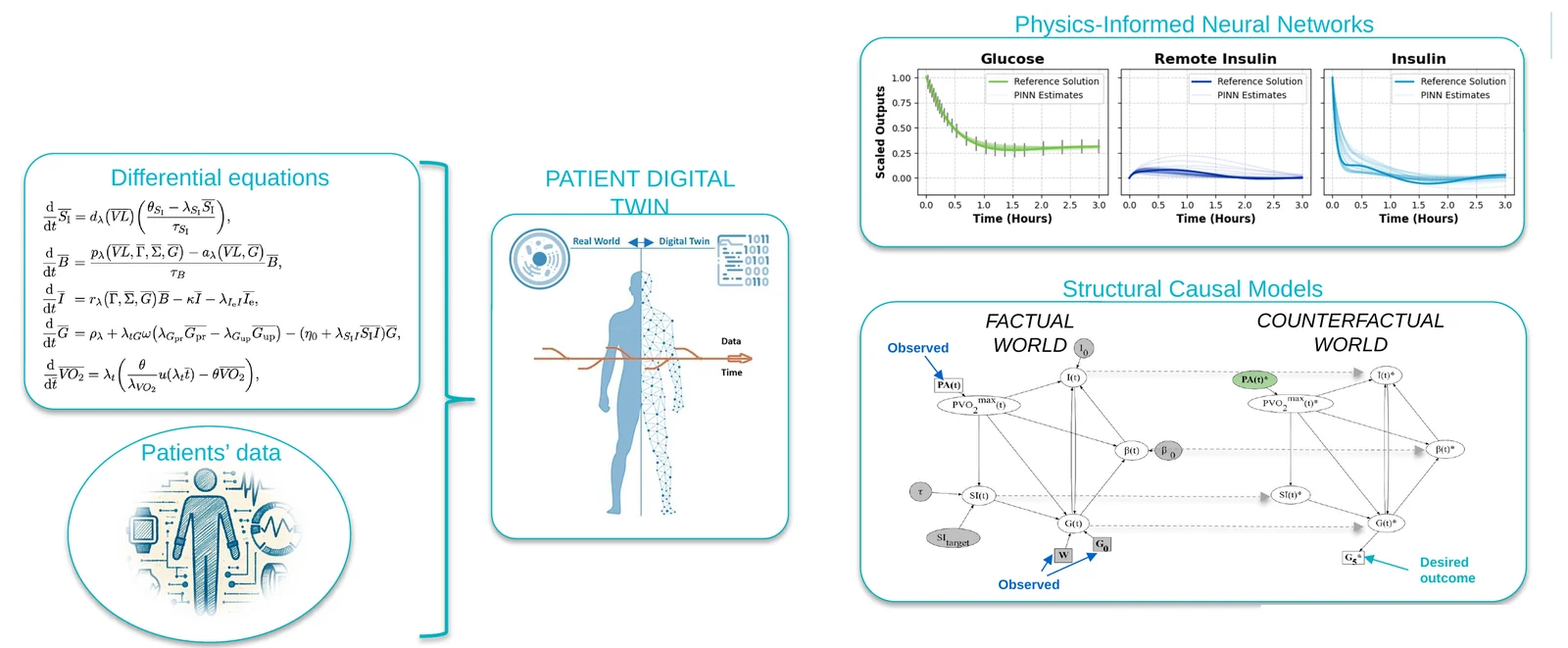
PRAESIIDIUM combines physics-informed machine learning with multi-scale, multi-organ mathematical models to build a digital twin of each patient, using clinical records and data from wearable sensors. Our group develops the machine learning components:
- physics-informed neural networks that estimate patient-specific risk and unobserved quantities, such as insulin dynamics, from glucose data;
- computationally efficient surrogates of complex models of prediabetes progression;
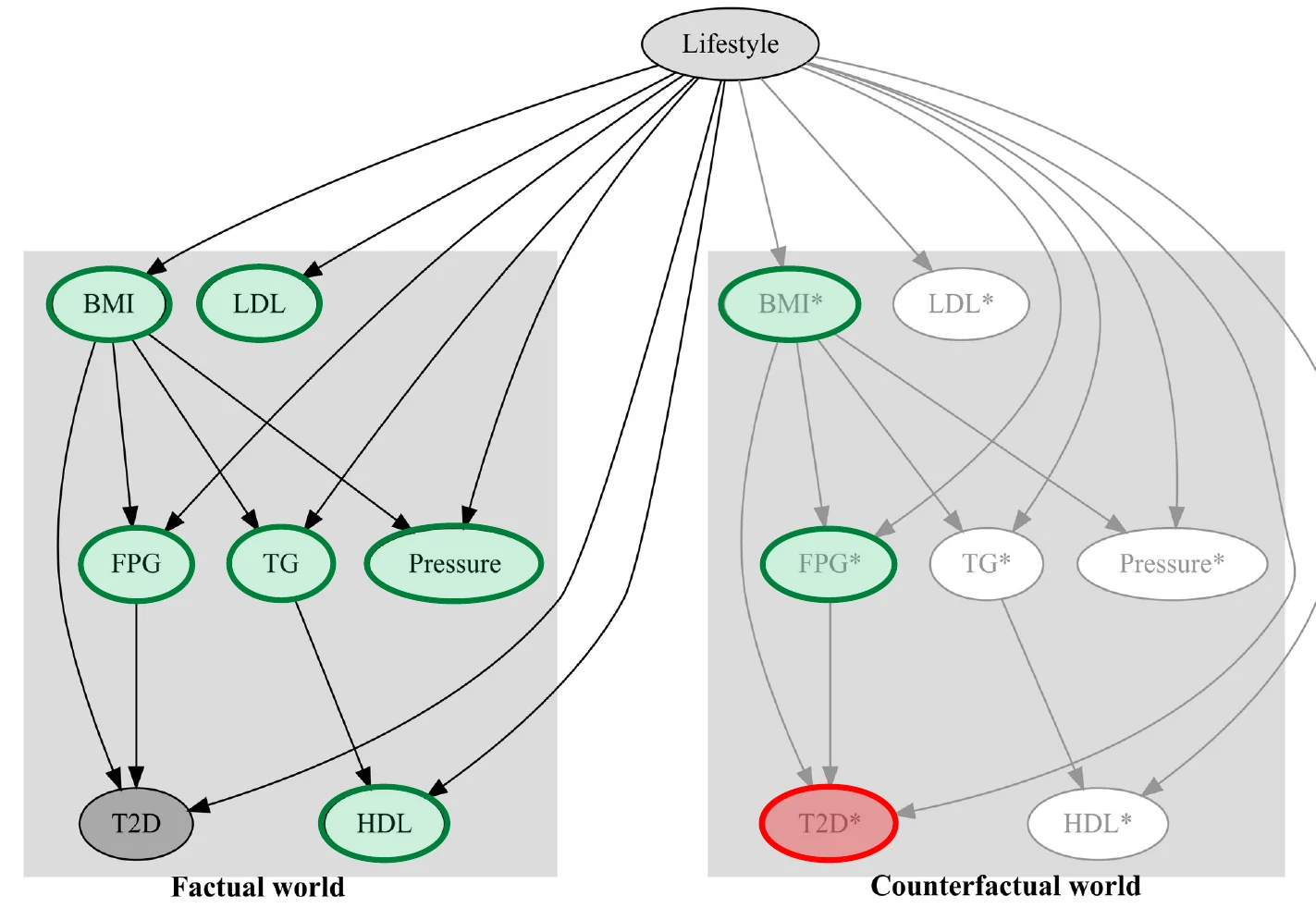
- causal models learned from electronic medical records and refined with expert knowledge, used to simulate the effect of lifestyle interventions;
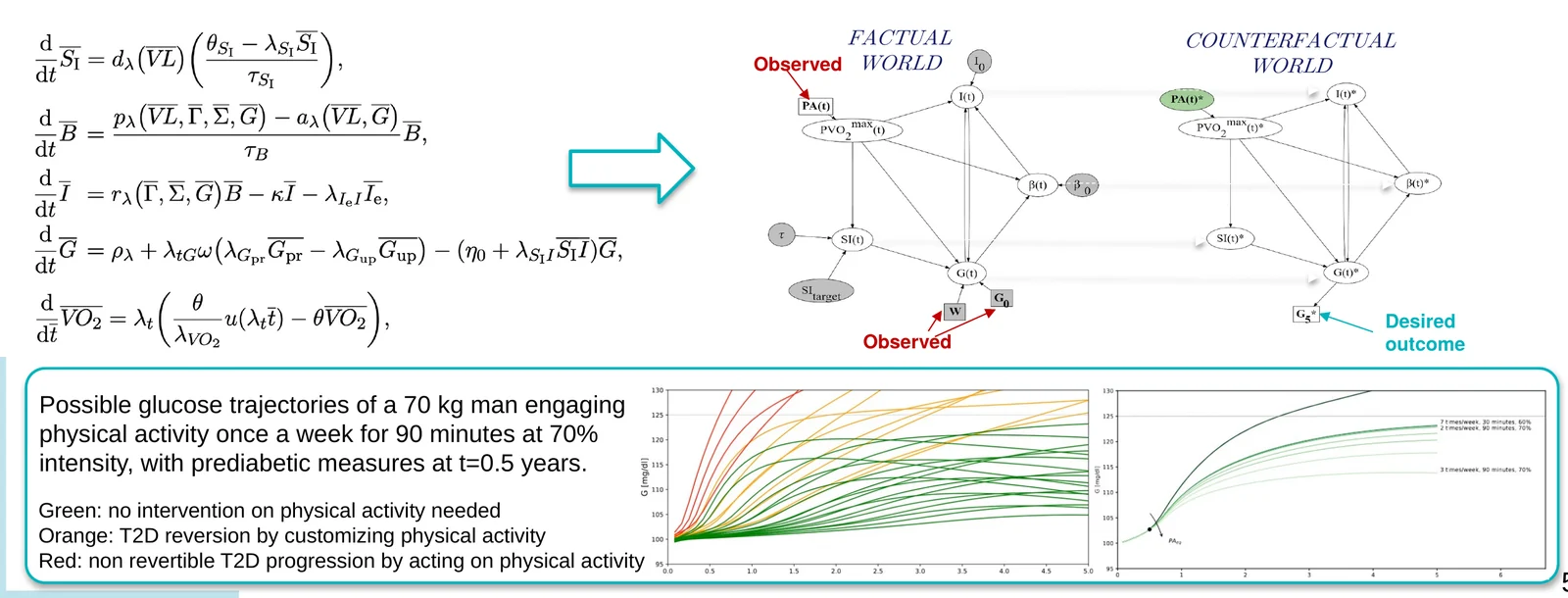
- counterfactual analysis that couples differential equations with structural causal models, to suggest physical activity plans expected to reduce the risk of type 2 diabetes for an individual patient.
Outcome
The methods are designed to be integrated in a platform for healthcare professionals and patients, linked to common wearable sensors that monitor physical activity.
Publications
-
Artificial Intelligence in Medicine (AIME 2025), Springer, Part I, 212–221, 2025Code
-
Physics-Informed Neural Networks for Hidden Insulin Dynamics Estimation from Glucose Data
Artificial Intelligence in Medicine (AIME 2025), Springer, Part II, 283–287, 2025Code
-
A reduced model for the long-term effects of physical activity on type 2 diabetes
-
A Computationally Efficient Deep Learning-Based Surrogate Model of Prediabetes Progression
IEEE International Conference on Bioinformatics and Biomedicine (BIBM 2024), 6951–6958, 2024Code
-
Data-Driven and Expert-Informed Causal Discovery for Type 2 Diabetes Risk in Primary Care
Medical Informatics Europe (MIE 2026), Studies in Health Technology and Informatics, 336, 298–302, 2026Code
Software
-
Physics-informed neural networks for hidden insulin dynamics
Physics-informed neural networks that estimate insulin dynamics, which are not measured directly, from glucose data.
-
Reduced model of type 2 diabetes progression
Simulation code for a two-scale model of the long-term effects of physical activity on type 2 diabetes and for its reduced (homogenised) version, which allows fast long-term predictions.
-
Surrogate model of prediabetes progression
Deep learning surrogate of a mechanistic model of prediabetes progression, for fast patient-specific simulations. Data and trained model are not included.
-
Counterfactual inference with differential equation models
Counterfactual inference for ordinary differential equation models, applied to a model of glucose regulation to assess personalised physical activity plans for the prevention of type 2 diabetes.
-
Causal discovery for type 2 diabetes risk
Bootstrap-based causal discovery of a global causal model of type 2 diabetes risk factors from primary care data.