Early identification of ventilator-associated pneumonia
Machine learning on data recorded by mechanical ventilators
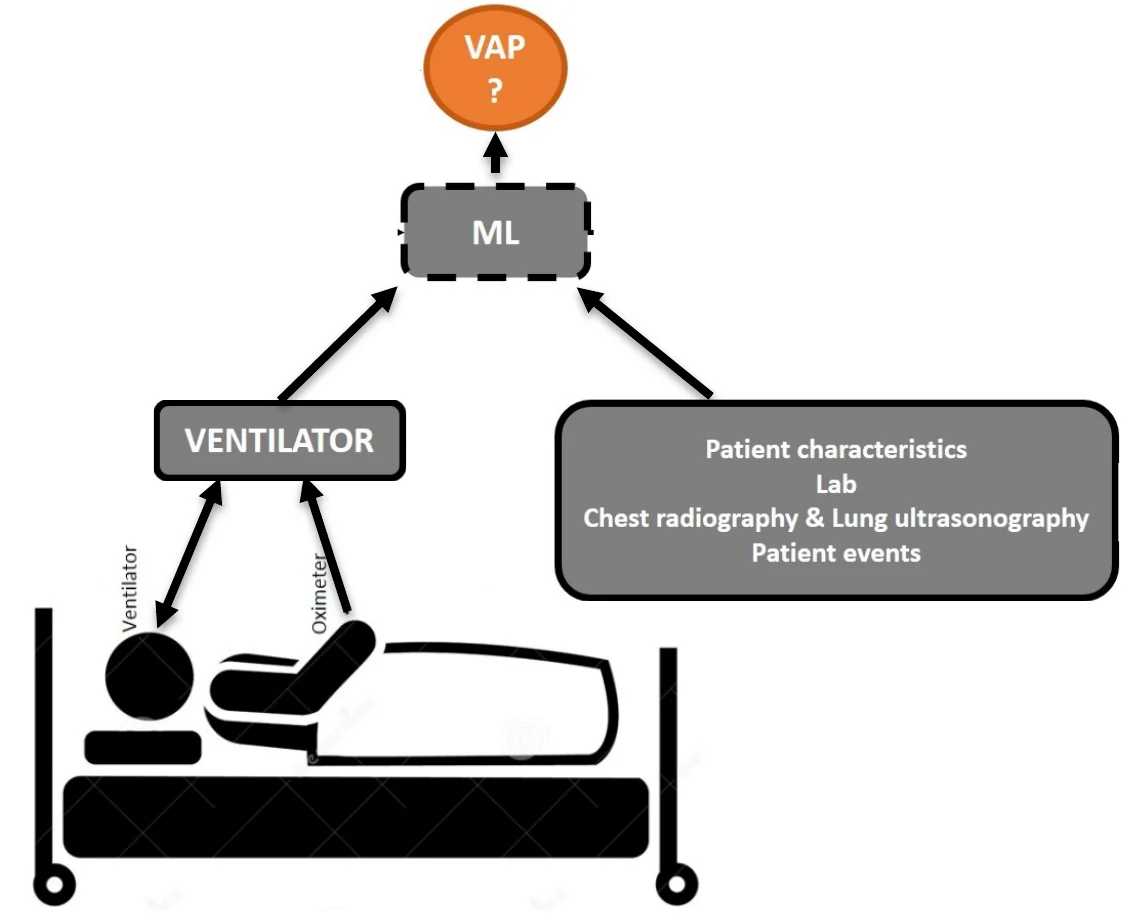
Challenge
Ventilator-associated pneumonia (VAP) is one of the most frequent hospital-acquired infections in the intensive care unit. It increases morbidity, mortality, the duration of mechanical ventilation and the length of hospital stay. Current diagnostic criteria are neither sensitive nor specific enough for an early diagnosis, with a risk of both antibiotic overuse and delayed treatment.
Approach
The project differs from previous approaches in three respects:
- data are extracted directly from the mechanical ventilator during respiratory support, using a dedicated memory device;
- the models are designed for the time series of ventilator measurements;
- the reference diagnosis is established by experienced intensive care physicians with access to the complete patient information, including imaging and microbiology results.
Impact
An earlier and more accurate detection of VAP could allow timely and targeted treatment, better patient outcomes and significant savings for the healthcare system.
Publications
-
Towards the identification of ventilator-associated pneumonia by ventilator-acquired data using machine learning: a prospective cohort study
Manuscript, 2026 Under review